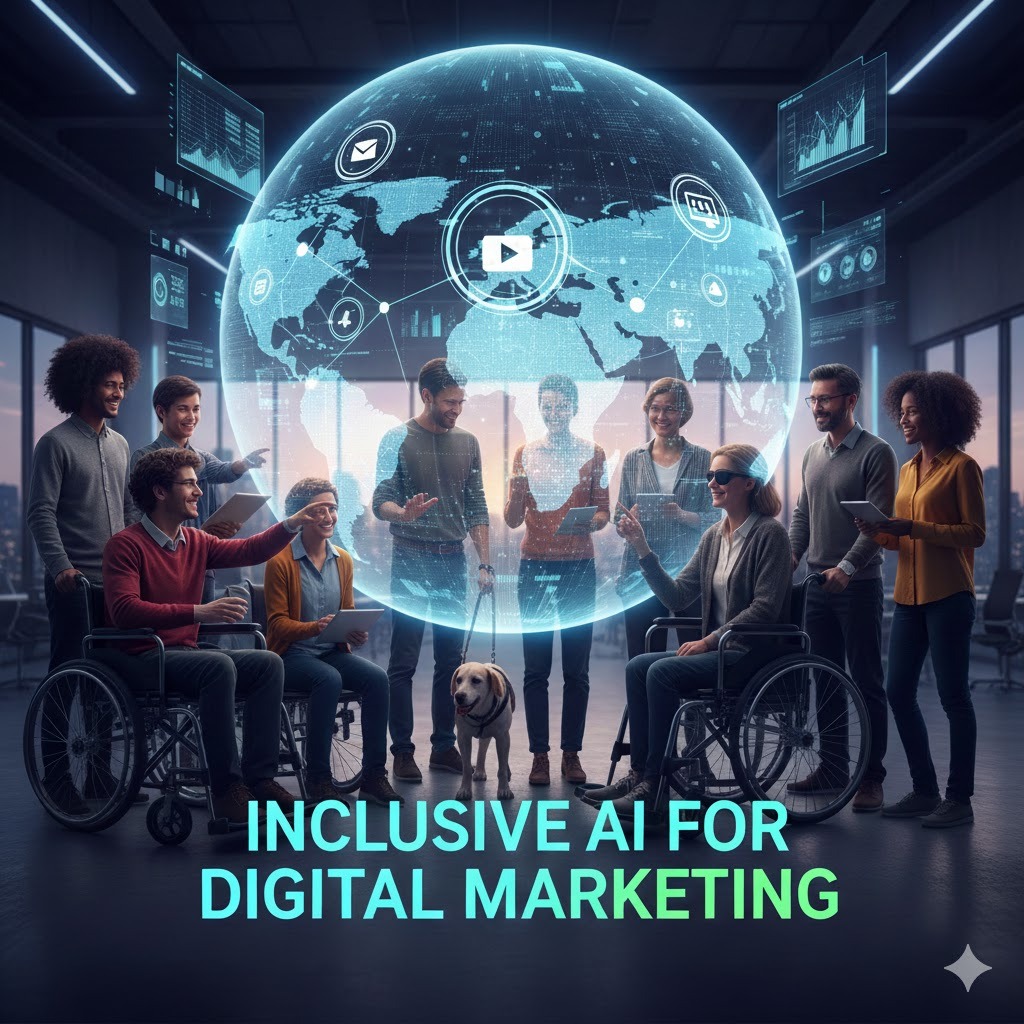
Artificial Intelligence is shaping decisions in hiring, marketing, healthcare, finance, and education. But as AI systems become more influential, a critical question emerges: Is AI working fairly for everyone?
This is where Inclusive AI comes in.
Inclusive AI is not just a technical concept — it is a strategic, ethical, and business necessity.
1. What Is Inclusive AI?
Inclusive AI refers to designing, training, and deploying AI systems that are fair, unbiased, accessible, and representative of diverse groups of people.
An inclusive AI system:
Does not discriminate based on gender, race, age, disability, or socio-economic background
Represents diverse populations in its data
Produces equitable outcomes across different user groups
Can be understood, questioned, and improved
In short, Inclusive AI ensures that technology works for everyone, not just for the majority.
“The core of what AI can do is to amplify human ingenuity.”
Satya Nadella - Microsoft CEO
Key Takeaways
SEO is still essential despite the rise of AI
Instagram and YouTube help people verify and trust your brand
WhatsApp Business creates fast and personal communication
Influencer marketing builds credibility and social proof
The right agency connects all these channels into one strategy
2. Why Inclusive AI Matters
AI systems influence real-world outcomes:
Who gets hired
Who receives loans
Which ads people see
How content is ranked and recommended
If AI is trained on biased or incomplete data, it can amplify existing inequalities rather than solve them.
From a business perspective, Inclusive AI:
Reduces legal and reputational risk
Builds user trust and brand credibility
Improves product performance across global markets
Aligns with ESG and ethical AI standards
For companies operating in digital ecosystems — especially in online marketing and advertising — inclusive AI ensures campaigns do not exclude, stereotype, or unfairly target audiences.
If you want to increase your visibility on Google in 2026, check out our blog post “How to Be Visible on Google in 2026.” Click here to learn practical strategies that actually work.
3. Common Examples of Non-Inclusive AI
Understanding what goes wrong helps define what to fix.
Examples include:
Facial recognition systems with higher error rates for darker skin tones
Job-matching algorithms favoring certain genders or educational backgrounds
Ad targeting systems that exclude specific demographic groups unintentionally
Language models that fail to understand accents, dialects, or non-native speakers
These issues are not intentional — they are often the result of poor data diversity and lack of oversight.
4. How to Implement Inclusive AI
4.1 Use Diverse and Representative Data
The foundation of Inclusive AI is data.
Key actions:
Audit training data for gaps and overrepresentation
Include data from different regions, cultures, ages, and abilities
Continuously update datasets to reflect real-world diversity
Without diverse data, even the most advanced AI will produce biased outcomes.
4.2 Test for Bias Regularly
Inclusive AI is not a one-time setup.
You should:
Test outputs across different demographic groups
Measure performance differences and error rates
Use fairness metrics alongside accuracy metrics
Regular evaluation helps identify problems before they scale.
4.3 Design for Accessibility
AI systems must be usable by everyone.
This includes:
Screen-reader compatibility
Voice-based interactions
Simple and clear language
Multi-language support
Accessibility is a core pillar of inclusivity, not an optional feature.
4.4 Ensure Transparency and Explainability
Users should understand how AI decisions affect them.
Best practices:
Explain why a recommendation or decision was made
Allow users to challenge or correct outcomes
Avoid “black-box” systems in high-impact decisions
Transparency builds trust — especially in AI-driven marketing and personalization.
4.5 Include Humans in the Loop
AI should support decisions, not replace accountability.
Inclusive AI requires:
Human oversight in sensitive use cases
Clear responsibility for AI outcomes
Cross-functional teams (technical, ethical, cultural perspectives)
A responsible digital ad agency, for example, ensures AI-driven targeting aligns with human judgment and brand values.
5. Inclusive AI in Practice
In real-world applications, Inclusive AI can:
Deliver fair ad targeting without excluding communities
Improve recommendation systems for diverse audiences
Personalize experiences without reinforcing stereotypes
Expand global reach through culturally aware AI models
When implemented correctly, Inclusive AI improves both performance and perception.
Conclusion
Inclusive AI is not about limiting innovation — it is about guiding it responsibly.
As AI becomes deeply integrated into business and society, inclusivity determines whether technology creates opportunity or inequality. Organizations that invest in Inclusive AI today will build stronger trust, better products, and more sustainable growth tomorrow.
Inclusive AI is not just the future of technology — it is the future of responsible innovation.
If you want a professional to handle this for you, get in touch with Reach and Reach and let the experts boost your Google visibility for 2026.